Your bathroom scale can tell you how much you weigh, but it cannot show where change is happening in your body. Weight may stay stable while your shape, measurements, estimated muscle mass or functional strength are shifting in meaningful ways.
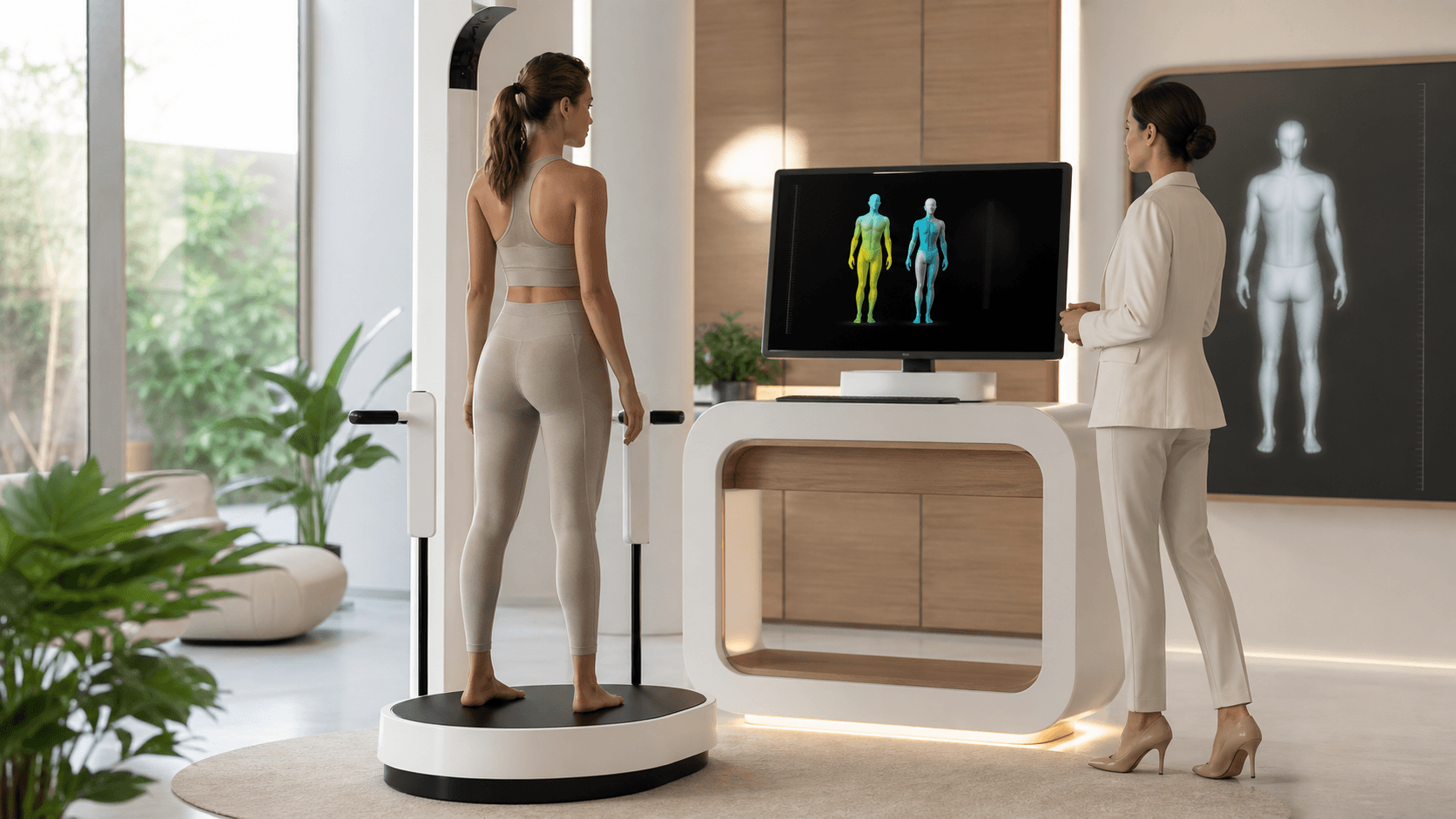
That is where a ShapeScale body composition scan in Melbourne can add useful context. At 1EM, we use 3D body scanning as a visualisation and progress-tracking tool, alongside clinical assessment and your own goals. It is not a diagnostic test, but it can help create a clearer baseline and support more informed conversations over time.
A Clearer Picture Than Your Bathroom Scale
Weight is one number, not a complete report card on your health or progress. It does not distinguish between muscle tissue, fat tissue, body water, food in your digestive system or natural day-to-day variation.
The scales can move for many ordinary reasons, including:
- Hydration levels and salt intake
- Menstrual cycle changes
- Sleep, illness or stress
- Recent exercise and muscle recovery
- Food and fluid still being digested
For this reason, a sudden change on the scale does not necessarily represent fat gain or fat loss. Equally, an unchanged number does not mean nothing is changing.
Body recomposition describes changes in muscle, fat and body water that may occur in different directions. You may be rebuilding strength after inactivity, improving your training routine or working through rehabilitation, yet see little movement in your overall weight. Meanwhile, your waist, hip, thigh or arm measurements may gradually change.
A ShapeScale body composition scan in Melbourne can provide a more visual way to observe these trends, without treating weight as the only marker that matters.
What a 3D Body Scan Can Show
A 3D scan creates an external visualisation of your body shape and records repeatable surface measurements. Rather than relying only on memory or clothing fit, repeat scans can make gradual physical changes easier to see, compare and discuss.
Depending on the scan output, this may include:
- A 3D body visualisation
- Circumference measurements at selected areas
- Comparison images from repeat scans
- Trend data across different appointments
These results can be particularly helpful when changes are subtle. A person may feel stronger or notice that clothes sit differently long before they see a major shift in body weight.
It is important, however, to understand what a scan can and cannot measure. Surface measurements are based on the outside shape of the body. Some body composition outputs may be estimates generated by the system, rather than direct measurements of internal tissues.
A scan should not be treated as a diagnostic assessment of internal fat, bone density, metabolic health or disease risk. It also cannot prove that a particular treatment, exercise plan or nutrition approach caused a change. We look at the results as one piece of information, not a final answer.
Consistency matters when comparing scans. Similar clothing, posture, time of day and scan conditions can make comparisons more useful. In most cases, trends across several scans are more meaningful than focusing closely on one result.
Progress Includes Strength and Function
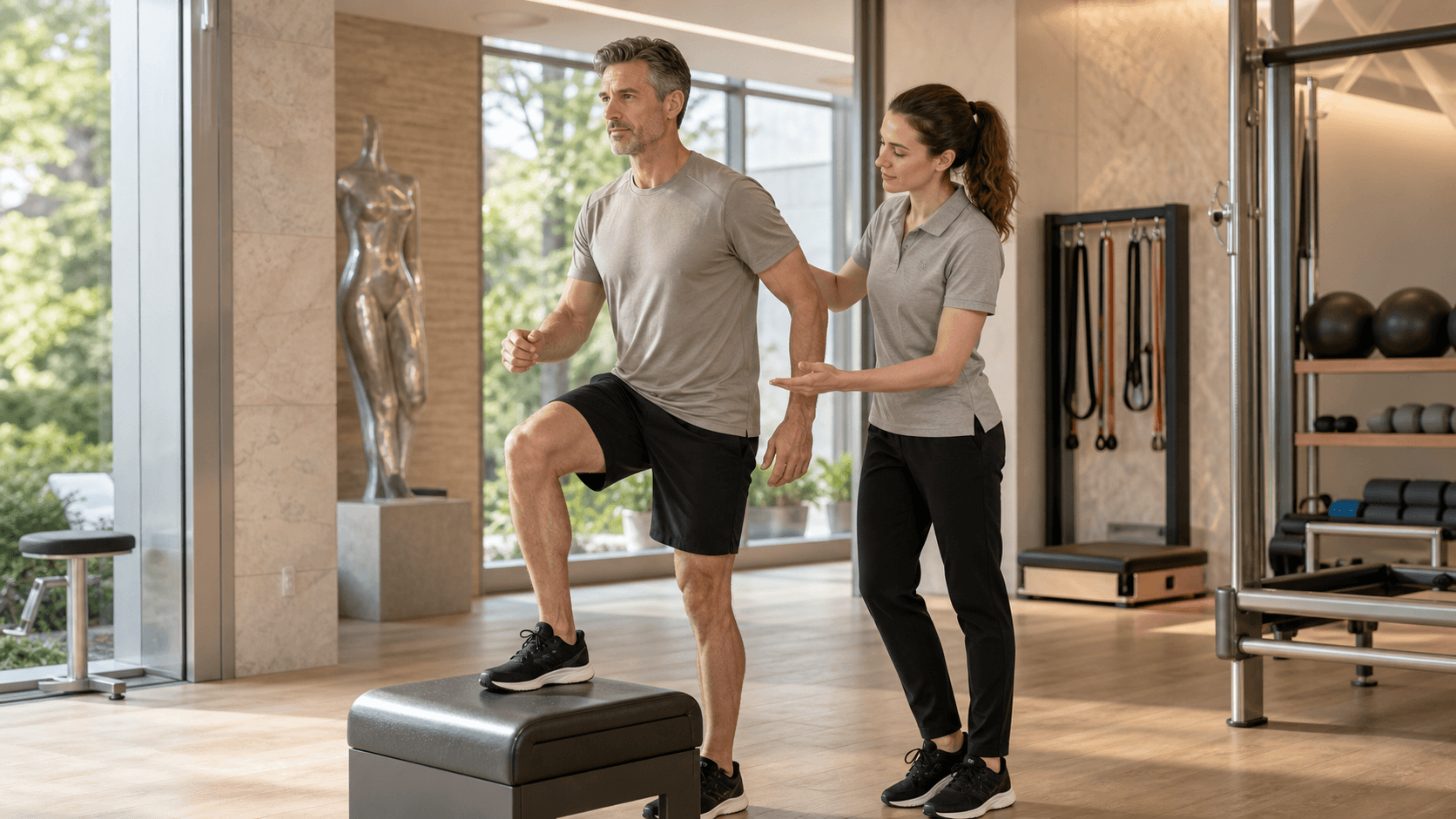
At 1EM, scan information is considered alongside clinical assessment, symptoms, movement, muscle activation, strength and day-to-day function. The purpose is not simply to pursue a smaller number or a particular body shape.
For someone rebuilding strength after a period of inactivity, changes in circumference or body shape may provide helpful context. The same may be true for people working towards improved core stability, healthier ageing or recovery from deconditioning. Yet the more important question is often how your body is functioning.
Progress may also show up as:
- Greater confidence with everyday movement
- Improved strength or muscle activation
- Better tolerance for exercise or physical tasks
- Less difficulty with activities that previously felt demanding
- Improvement in symptoms where clinically relevant
Appearance measures and health outcomes are not the same thing. A smaller waist or thigh measurement does not automatically mean better health. Likewise, an unchanged measurement does not mean you have failed to make progress.
Someone may be moving more comfortably, feeling steadier, becoming stronger or returning to activities that matter to them, even when their scan measurements look similar. We encourage a broader view, particularly when rehabilitation, pelvic health or functional strength is part of the clinical goal.
Know the Limits of Body Composition Data
Body composition information can be useful, but it has limits. A 3D scan cannot diagnose a medical condition, confirm hormonal changes, assess pelvic floor function or measure visceral fat with diagnostic certainty.
If you have urinary symptoms, pain, unexplained weight change, ongoing fatigue or another concerning change in your health, appropriate medical review remains important. A scan should never replace investigation when symptoms need assessment.
Numbers and images also affect people differently. Some find objective tracking reassuring because it shifts attention away from daily scale changes. Others may find frequent measurements or comparison images unhelpful, particularly if they are prone to perfectionism, body dissatisfaction or harsh self-judgement.
A balanced approach means using information only when it supports your wellbeing and decision-making. Our doctor-led discussions can place scan results in context with your health history, medications, activity level, nutrition, rehabilitation needs and personal priorities.
The aim is not to chase a perfect result. It is to understand what the information may mean for you, and what it does not mean.
Start Spring with a Better Baseline
Late winter can be a practical time to pause and establish a baseline before spring routines become busier. Rather than setting rapid weight-loss targets, it may be more useful to consider your current strength, measurements, mobility and overall wellbeing.
A ShapeScale body composition scan in Melbourne may support objective progress tracking during a strength, rehabilitation or measured body recomposition plan. Results vary, and the scan should be viewed as one source of information alongside clinical assessment and how you feel in daily life.
The most useful baseline is one that gives you a realistic starting point. Over time, it can help shift the focus from short-term scale fluctuations to patterns that better reflect your strength, function and broader health goals.
Track Change With Greater Clarity
At 1EM, we can help you understand whether a ShapeScale body composition scan in Melbourne suits your goals and how it may fit alongside your broader health plan. Our doctor-led team uses objective tracking to support informed conversations about strength, function and body composition over time. If you would like to discuss your circumstances, contact us to arrange an appointment.